Introduction
For patients exploring cancer treatment, the idea of smaller incisions and potentially faster recovery can be reassuring. A consultation with a Best Surgical Oncologist In Pune can help determine whether a minimally invasive approach is appropriate for a particular cancer, stage, tumour location, and overall health. But minimally invasive surgery is not suitable for every cancer or every patient, and the priority remains safe and effective cancer removal.
Modern cancer surgery has changed considerably over the years.
Traditional open surgery remains an important treatment option. At the same time, advances in surgical technology have allowed surgeons to perform selected procedures through smaller incisions.
The important question is not simply whether surgery can be performed through small incisions.
The more important question is:
Can the cancer be removed safely and effectively using a minimally invasive approach?
What Is Minimally Invasive Cancer Surgery?
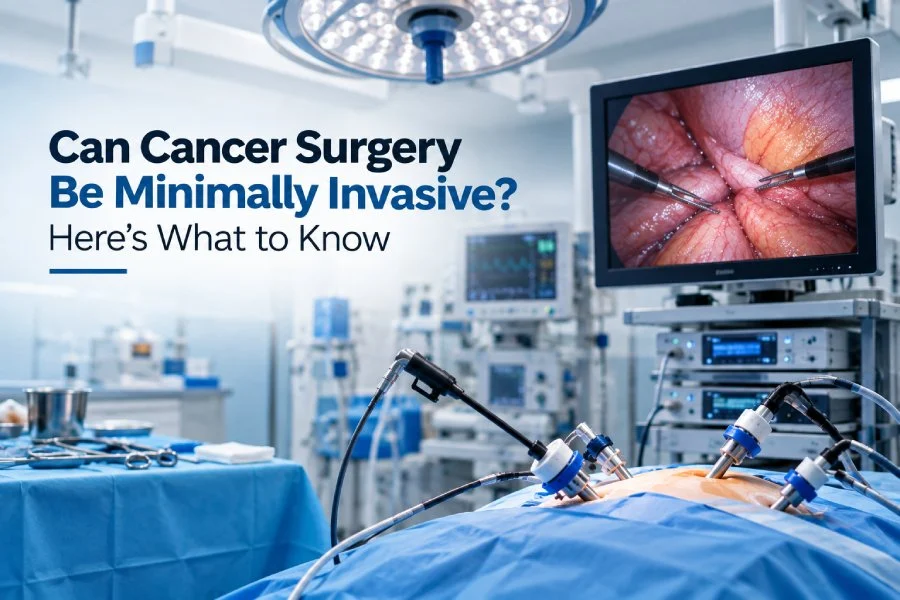
Minimally invasive cancer surgery uses smaller incisions than conventional open surgery to access and treat a tumour. Instead of making one large incision, surgeons may use specialised instruments inserted through several small openings.
A camera can provide a magnified view of the surgical area, while specialised instruments allow the surgeon to perform the required procedure.
Depending on the cancer and procedure, approaches may include
- Laparoscopic surgery
- Robotic-assisted surgery
- Endoscopic procedures
- Other specialised minimally invasive techniques
The approach varies according to the organ involved and the type of cancer being treated. Minimally invasive does not mean minor surgery.
Cancer surgery can still be complex, even when performed through small incisions.
How Is Minimally Invasive Surgery Different?
The major difference is the way the surgeon reaches the target area.
Open surgery
Typically involves
- A larger incision
- Direct access to the surgical area
- Conventional surgical instruments
- A potentially longer recovery period, depending on the operation
Minimally invasive surgery
Typically involves
- Smaller incisions
- Camera-assisted visualisation
- Specialised instruments
- Potentially less disruption to surrounding tissues
- Recovery that may be shorter for selected procedures
However, the actual benefits depend on the operation, the patient’s health, the cancer, and the surgeon’s experience.
Common Minimally Invasive Cancer Surgery Techniques
Several techniques may be used depending on the clinical situation.
Laparoscopic Surgery
Laparoscopic procedures use small incisions through which a camera and surgical instruments are inserted. The camera displays the surgical field on a monitor.
This approach is commonly used for selected procedures involving areas such as the abdomen and pelvis.
Robotic-Assisted Surgery
Robotic systems allow surgeons to control specialised instruments from a console.
The technology can provide:
- Magnified visualisation
- Flexible instrument movement
- Precise control
- Enhanced access to difficult anatomical areas in selected procedures
Robotic assistance does not mean that a robot independently performs the operation.
The surgeon controls the instruments throughout the procedure.
Endoscopic Procedures
Certain cancers or precancerous lesions can sometimes be treated using instruments introduced through natural body openings.
Whether an endoscopic approach is appropriate depends heavily on the location, size, depth, and characteristics of the lesion.
When Can Cancer Surgery Be Minimally Invasive?
There is no universal rule that determines whether a cancer operation should be minimally invasive.
The decision depends on the individual case.
Minimally invasive approaches may be considered when
- The tumour can be accessed safely
- The cancer’s location is suitable
- Adequate removal can be achieved
- The required margins can be maintained
- The patient’s overall health permits the procedure
- The surgical team has appropriate expertise
- The approach does not compromise cancer treatment
In some cancers, minimally invasive surgery is well established for selected patients.
In others, open surgery may remain the preferred approach.
What Factors Determine Surgical Approach?
A surgeon may consider several factors before recommending an operation.
1. Cancer Type
Different cancers behave differently.
The surgical approach used for one tumour type may not be appropriate for another.
2. Cancer Stage
Stage provides information about how extensive the disease is.
More advanced disease may require a different surgical strategy.
3. Tumour Size
Large tumours may sometimes be more difficult to remove through minimally invasive techniques.
However, size alone does not determine the approach.
4. Tumour Location
A tumour in an anatomically difficult area may require a different surgical technique.
Access, surrounding structures, and the ability to achieve complete removal all matter.
5. Previous Surgery
Previous abdominal or other surgery can result in scar tissue or adhesions.
This may affect whether a minimally invasive approach is suitable.
6. Overall Health
Medical conditions, nutritional status, fitness, and other health factors can influence surgical planning and recovery.
Benefits of Minimally Invasive Cancer Surgery
When appropriate, minimally invasive procedures may offer several potential benefits compared with conventional open surgery.
Potential benefits include
- Smaller incisions
- Less postoperative discomfort in some cases
- Reduced blood loss in selected procedures
- Shorter hospital stay for some operations
- Earlier mobilisation
- Smaller scars
- Potentially faster return to routine activities
However, these benefits should not be assumed for every operation.
The outcome depends on the procedure and individual patient.
The priority remains cancer control
A smaller incision is not automatically a better operation.
The surgical approach should allow the tumour to be removed safely while following appropriate oncological principles.
Possible Limitations and Risks
Minimally invasive surgery also has limitations.
Potential concerns can include
- Longer operating time for some procedures
- Technical difficulty
- Need for specialised equipment
- Learning curve
- Possibility of converting to open surgery
- Bleeding
- Infection
- Injury to nearby structures
- Anaesthesia-related complications
- Cancer-specific risks
Conversion to Open Surgery
Sometimes a procedure that begins laparoscopically or robotically needs to be converted to open surgery.
This can happen when
- Bleeding needs rapid control
- The tumour cannot be safely accessed
- Anatomical conditions make minimally invasive surgery unsuitable
- The surgeon determines that open surgery provides a safer option
Conversion is not necessarily a complication.
In some situations, it is the safest decision for the patient.
Laparoscopic Cancer Surgery Explained
Laparoscopic cancer surgery uses a camera and specialised instruments inserted through small openings.
The surgeon views the operating area on a monitor rather than directly looking into the surgical field through a large incision.
A typical process may involve
- Anaesthesia is administered.
- Small incisions are created.
- A camera is inserted.
- Surgical instruments are introduced.
- The tumour and surrounding structures are assessed.
- The planned cancer operation is performed.
- The specimen is removed using an appropriate technique.
- The surgical sites are closed.
The exact steps vary significantly according to the cancer and procedure.
Robotic Surgery and Cancer Treatment
Robotic-assisted surgery has become another option for selected cancer operations.The system can provide enhanced visualisation and allow controlled movement of specialised instruments.
It may be particularly useful when operating in anatomically confined spaces or where precise instrument movement is beneficial. However, robotic surgery is not automatically better than laparoscopic or open surgery.
The appropriate approach depends on
- Cancer type
- Tumour location
- Stage
- Surgical objective
- Patient factors
- Surgeon expertise
- Available technology
The technology should support the treatment goal rather than determine it.
What Happens Before Surgery?
Surgical planning generally begins well before the operation.
Depending on the cancer, the evaluation may include
- Medical history
- Physical examination
- Imaging studies
- Biopsy results
- Blood tests
- Assessment of overall health
- Anaesthesia evaluation
- Review of previous treatments
The surgical team may also assess whether chemotherapy, radiotherapy, targeted therapy, immunotherapy, or another treatment should be given before or after surgery. Cancer treatment is often multidisciplinary.
A surgeon may work with medical oncologists, radiation oncologists, radiologists, pathologists, anaesthetists, nutrition professionals, and other specialists.
Recovery After Minimally Invasive Surgery
Recovery varies significantly depending on the operation. Some patients may resume routine activities relatively quickly, while others require several weeks.
Recovery can depend on
- Type of cancer surgery
- Number and size of incisions
- Patient’s general health
- Surgical complexity
- Complications
- Previous treatments
- Nutrition
- Physical activity
- Follow-up care
Patients should follow their surgical team’s specific instructions regarding:
- Wound care
- Physical activity
- Diet
- Medication
- Warning signs
- Follow-up appointments
Do not compare your recovery directly with another patient’s experience.
Every operation and patient is different.
Questions to Ask Your Surgical Team
If minimally invasive surgery has been suggested, consider asking:
About the procedure
- Is minimally invasive surgery appropriate for my cancer?
- What type of procedure is being recommended?
- Why is this approach suitable for me?
About cancer treatment
- Can the tumour be completely removed using this approach?
- What surgical margins are expected?
- Will lymph nodes need to be removed?
- Could the operation need to be converted to open surgery?
About recovery
- How long might I stay in hospital?
- When can I return to normal activities?
- What symptoms should prompt immediate medical attention?
About alternatives
- What are the advantages and disadvantages of open surgery?
- Are there other treatment options?
- Would chemotherapy or radiotherapy be needed?
These questions can help you understand the reasoning behind the recommended treatment rather than focusing only on the incision size.
Pros and Cons
Potential Advantages
- Smaller incisions
- Potentially reduced postoperative pain
- Less visible scarring
- Earlier mobilisation in selected cases
- Potentially shorter hospitalisation
- Magnified surgical visualisation
- Precise instrument control in appropriate procedures
Potential Limitations
- Not suitable for every cancer
- Requires specialised expertise
- May require specialised equipment
- Can involve a learning curve
- Conversion to open surgery may sometimes be necessary
- Complex cases may still require conventional surgery
- Costs and availability can vary
The benefits and limitations should always be discussed in relation to the individual patient’s cancer.
Conclusion
Yes, cancer surgery can be minimally invasive in many carefully selected situations.However, the goal should never be to choose the smallest possible incision simply because it sounds more advanced.
The real objective is effective cancer treatment with the safest and most appropriate surgical approach.
Minimally invasive procedures can offer potential benefits such as smaller incisions, reduced postoperative discomfort, earlier mobilisation, and shorter hospital stays for selected operations. At the same time, they are not appropriate for every tumour or patient.
If you are considering cancer surgery, discuss the available approaches with your surgical team and ask why a particular technique has been recommended for your specific situation.
FAQ’s
Take the next step with a clear understanding of your surgical options.
Recent Posts
- What Makes Head and Neck Cancer Different From Other Cancers?
- Can Cancer Surgery Be Minimally Invasive? Here’s What to Know
- When Should You See a Gynaecological Cancer Specialist?
- How Surgical Oncologists Help Patients Make Better Cancer Treatment Decisions
- How Is Oral Cancer Diagnosed? A Step-by-Step Look at the Process